

Most procurement conversations about stainless steel pipe revolve around grade, wall thickness, and outer diameter. These matter — they determine whether the pipe can handle the pressure, the chemical environment, and the structural loads of the application. But there’s a specification detail that gets significantly less attention during the buying process and causes a disproportionate number of problems afterwards: the surface finish.
The quality of the surface finish does not relate to the appearance of the piping when it has been installed inside walls or underground. This factor impacts the performance of the pipe in places where it counts — pharmaceutical and food processes, where surface finish will determine whether or not the cleaning process will meet the required cleanliness levels; in corrosive conditions, where surface finish will impact on the rate of corrosion attack; and in architectural or industrial installations, where the specified appearance finish is an element of the installation. Purchasing the appropriate grade but specifying the incorrect finish poses real challenges.
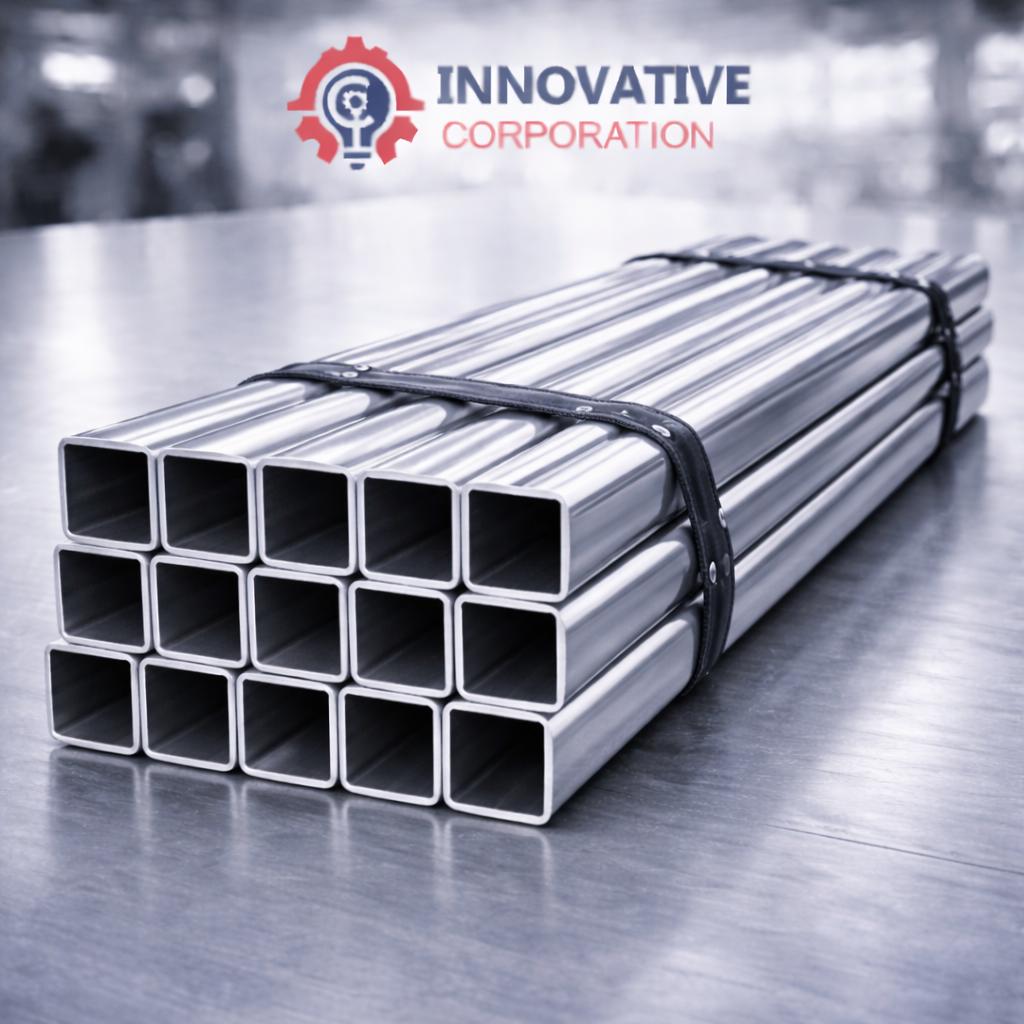
What Surface Finish Actually Means in Manufacturing Terms
A surface finish describes the final texture and reflectivity of the pipe’s exterior and interior surfaces as they leave the manufacturing process. Different finishes are produced through different post-production treatments — some are simply the as-produced surface from rolling and annealing, others involve mechanical polishing to progressively finer abrasive grades, and some involve chemical treatments that modify the surface composition rather than just its texture.
Each of these processes produces different measurable surface roughness values — typically expressed as Ra (average roughness) in micrometres — and those values have direct functional consequences in different applications. Understanding which finish corresponds to which functional requirement is what separates a pipe specification that performs from one that merely meets the grade requirement on paper.
Mill Finish: The Baseline for General Industrial Work
Mill finish is the natural finish obtained straight out of the production process – no polishing done, no treatment applied other than the treatment naturally achieved through rolling and annealing. It may not be the most visually appealing type of finish, and that was never its intended purpose. The only things it is are practical – strong, economical, and suitable for construction purposes where looks do not matter at all.
For large-scale infrastructure projects, fabrication work, or structural applications where the pipe is going behind cladding or underground, specifying anything more refined than mill finish is simply paying for something the application doesn’t require. The money is better spent on ensuring the grade and dimensional specifications are correct.
2B Finish: The Workhorse of Industrial Piping
The 2B finish is produced by cold rolling, annealing, and light skin passing through smooth rolls, which gives it a smooth, slightly reflective appearance with a consistent surface character. It offers meaningfully better corrosion resistance than mill finish because the cold working and annealing process produces a more refined surface that the passive chromium oxide layer can form on more uniformly.
This is why 2B finish has become the default specification across food processing, chemical manufacturing, water treatment, and general process industries. It's easier to clean than rougher surfaces, holds up better in moderately aggressive environments, and costs less than polished finishes while delivering significantly better functional performance than mill finish for hygiene-sensitive applications. For most industrial piping specifications that don't involve pharmaceutical or dairy applications with the strictest surface requirements, 2B is the right starting point.
Bright Annealed (BA) Finish: When Surface Quality Goes Up a Level
Bright Annealed finish is produced through annealing in a controlled atmosphere — typically hydrogen or nitrogen — that prevents surface oxidation during the heat treatment process. The result is a brighter, more reflective surface than 2B, with a more uniform surface character and lower Ra values that make it better suited for applications where the 2B surface isn’t quite smooth enough.
Pharmaceutical manufacturing, dairy processing, and cosmetics production regularly specify BA finish because their cleaning validation protocols require demonstrable surface cleanliness that rougher finishes make harder to achieve consistently. The smoother the surface, the smaller the surface area available for microbial attachment and residue accumulation, and the more reliably a cleaning cycle achieves the required result. In these applications, the finish isn’t a specification preference — it’s part of the hygiene system design.
Mirror Finish: Precision Smoothness With Specific Applications
Mirror finish is achieved through progressive mechanical polishing to very fine abrasive grades, producing a highly reflective surface with Ra values approaching the limits of what mechanical polishing can achieve. It’s associated with decorative and architectural applications because of its visual impact, but its functional advantages in ultra-high-hygiene applications are the more technically interesting reason to specify it.
In applications where bacterial contamination risk needs to be minimised as much as physically possible — certain pharmaceutical production environments, clean room infrastructure, ultra-pure water systems — the extremely low surface roughness of mirror finish provides the lowest available surface area for biofilm formation. For most industrial applications, BA finish is sufficient. Mirror finish is for the applications where 'sufficient' isn't the standard being applied.
Pickled and Passivated Finish: Restoring What Fabrication Damages
Welding, cutting, and heat exposure during fabrication all damage the chromium oxide passive layer that gives stainless steel its corrosion resistance. The heat-affected zones around welds, in particular, can develop a discoloured oxide layer — commonly called heat tint or weld scale — that has significantly lower corrosion resistance than the surrounding material. In a chemical processing environment or marine application, those compromised zones become preferential sites for corrosion attack.
Pickling and passivation are the two-step chemical treatment process that addresses this. Pickling removes the damaged surface layer, heat tint, and any iron contamination that may have been introduced during fabrication. Passivation then allows the chromium oxide layer to reform uniformly across the treated surface, restoring the corrosion resistance the material is specified to provide. For any fabricated stainless steel system going into a chemically aggressive or moisture-intensive environment, pickling and passivation after fabrication isn’t optional — it’s what makes the corrosion resistance specification meaningful.
Matching Finish to Application — and Getting It Right the First Time
The practical guidance is straightforward: structural and non-hygiene industrial applications — mill finish. General process industries with moderate hygiene requirements — 2B. Pharmaceutical, dairy, and high-specification food processing — BA or better. Chemical, marine, and welded fabrications going into aggressive environments — pickled and passivated after fabrication. Architectural and ultra-high-hygiene applications — mirror.
What matters more than memorising these categories is discussing the application requirements openly with the supplier before specifying — because finish requirements interact with grade, wall thickness, and fitting specifications in ways that affect the whole system, not just the individual pipe. Experienced Stainless Steel Pipe Manufacturers in Ernakulam who work across multiple industries encounter these application decisions regularly and can flag when a proposed specification creates a mismatch between what the finish provides and what the application requires.
Why Consistency Between Pipes and Fittings Matters
A piping system specified to BA finish standard with fittings supplied to 2B specification isn’t a BA finish system — it’s a system with hygiene inconsistencies at every connection point. In pharmaceutical or food processing applications where the finish specification exists precisely because those connection points matter for cleanability and contamination control, this inconsistency undermines the purpose of the finish specification entirely.
Working with a reliable stainless steel pipe fittings manufacturer in Mumbai alongside a stainless steel pipe supplier in Ernakulam who supply to consistent surface finish standards ensures the system performs as specified throughout — not just along the straight pipe runs where the finish is most visible and easiest to verify.
Conclusion
Surface finish specification is one of those details that experienced industrial buyers get right and first-time buyers often don’t think to ask about until there’s a problem. Getting it right at the specification stage costs nothing extra and prevents a category of operational and compliance issues that are genuinely difficult to address retrospectively.
Whether the requirement is mill finish for practical industrial work, 2B for general process applications, BA for pharmaceutical and dairy systems, or pickled and passivated for chemically aggressive environments, sourcing from experienced stainless steel pipe manufacturers in Mumbai and a trusted stainless steel pipe supplier in Mumbai who understand these distinctions is what ensures the specified finish is what actually arrives on site — and performs the way the specification intended.
